A recent news article in Helsingin sanomat piqued my interest: in the deepest mine in Europe at Pyhäjärvi, Luonnonvarakeskus (Luke) is running a research project on how plants like potatoes and nettle could be grown deep underground. In this case, almost 700 meters underground. Here’s the article in Finnish: Euroopan syvin kaivos… and the project’s page on Luke’s website: Älykästä tutkimusta ja koetuotantoa. I’ve got in touch with Luke and sent initial emails to researchers working on this project, but as most of the people are on their summer vacations I’ve yet to hear back from them. I’ll get back on this a bit later in my future posts.
In the meanwhile, I’ve been looking for more research papers, researchers and articles to rebuild a better version of my literature survey. After looking into –just a glance, really– professor Salah Sukkarieh’s work on University of Sydney’s pages I got a hunch that it might be a good idea to further look into what I could find by searching for organizations first and then browsing through their publications. So, instead of the usual google + google scholar + keywords combination I’ve looked into different organizations like universities and agricultural unions, people working in those organizations, their publications and events.
But before going into that, I’d like to update you on how and what I’ve found recently: Via Sukkarieh’s articles I found Journal of Field Robotics and International Society for Horticultural Science, “The world’s leading independent organization of horticultural scientists”. ISHS has many publications, especially Acta Horticulturae where I’ve found several articles I would like to read, but unfortunately it’s not available in my school library and I’m not sure if paying for membership would be profitable enough. Same with the Journal of Field Robotics. So far I’ve marked the articles I’ve found most interesting and will return to them if needed. If so, I’ll see if I can get university library to get an access. It appears that the first issue of the current year of the Journal of Field Robotics is freely available here, but I didn’t find any articles there that would be relevant to my work.
While browsing some promising articles, I came across Field and Service Robotics, Results of the 9th International Conference which again appeared very promising, but you guessed it, I can’t get access to since neither my school Haaga-Helia, University of Helsinki nor Aalto university can be found in the organizations list of the Shibboleth / Open Athens login page, at least for this journal.
Also, Elsevier’s journal Computers and Electronics in Agriculture that I found via Acta Horticulturae is just as well behind a paywall. I hope I can find a way in, but I’m feeling a bit sads. I’m going home.
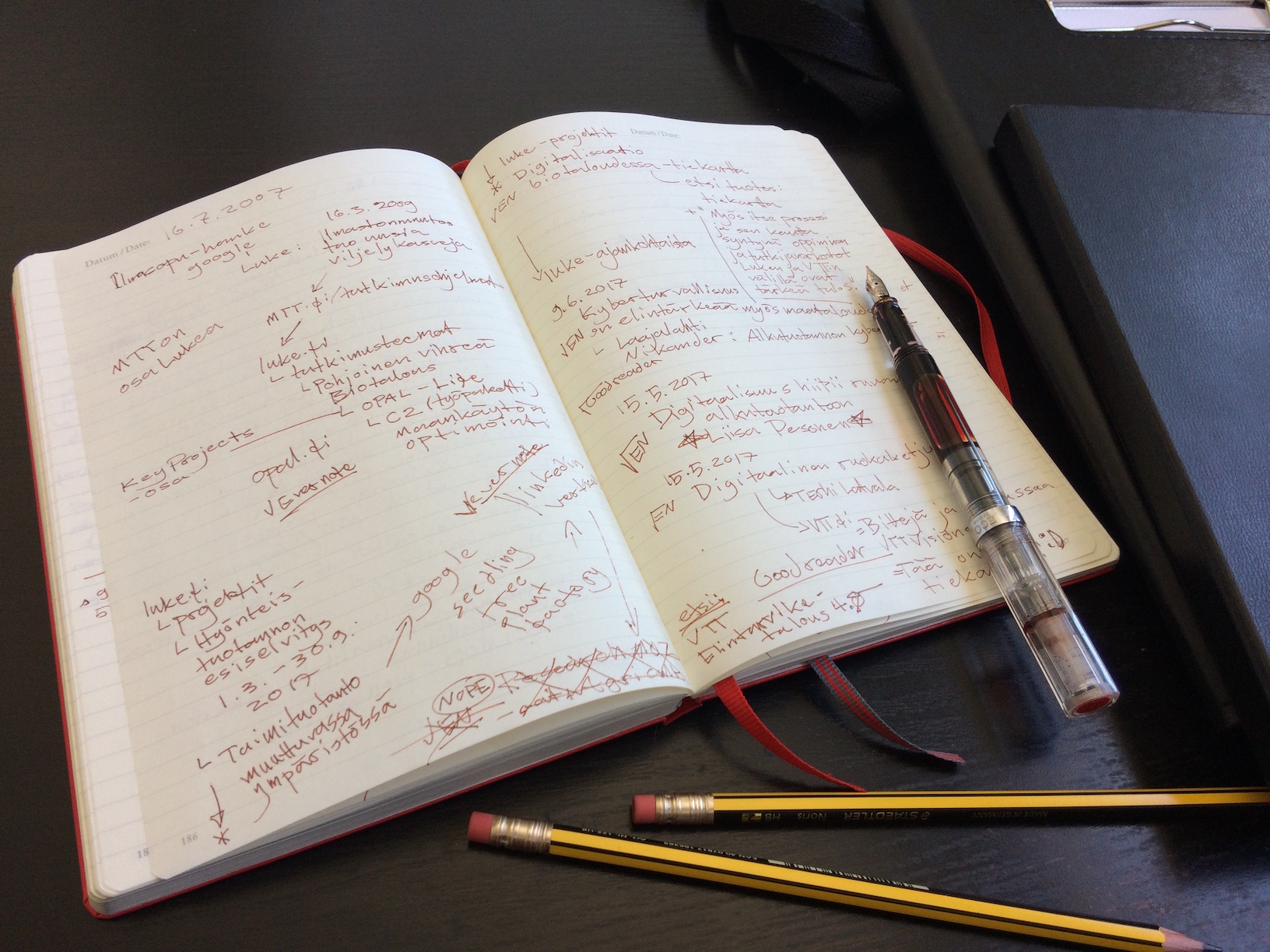
Which means, to Finnish universities like University of Helsinki and Aalto university. This was encouraged by finding Timo Oksanen’s Robottikylvön ja -kylvömuokkauksen mahdollisuudet ja haasteet Suomessa (PDF) via The Scientific Agricultural Society of Finland’s bi annual conference Maataloustieteen päivät, which was a find on it’s own. But since I forgot which way I found it, I’ve also started to keep track of which way I came across it in my notebook (pen and paper –shocking, I know), in addition of keeping track of what I find and where in my Evernote. Finally, sources making it to my work get added to my Zotero database. When I feel like I’ve got something to “write home about” I write about it in this blog to clear the image a little bit. Then, I’ll get around to actual writing. I think-feel this system could be improved upon a lot but right now it serves me well enough. Please comment or email me if you have any advice!
Another case in point, I’ve got no clue how I came across Tyynelän tila, but their pages, both web and FB combined with Etelä-Saimaa’s article (PDF) and Kauppalehti’s article (PDF) convinced me that I’d better contact Juuso Joona, master of the farm and see if I could visit.
Anyhoo, now we’re getting to that part about browsing organizations’ pages: Inspired by my finding SMTS and Maataloustieteen päivät, I’ve branched out from universities to see what else I could find. Looking into other Finnish agricultural organizations I’ve come across Pro Agria, Luke and Finnish Environment Institute (Syke) with some success: while I haven’t found much from Pro Agria and Syke, going through Luke’s archive of news, publications and projects has yielded many notes, which equals stuff to read. Lots of stuff to read. The reason I haven’t found much from Syke’s site is just that there’s so much to go through that I’ll need to do some search engine voodoo, and I haven’t got around doing that just yet.
I actually found Luke’s OPAL-Life project twice: first I was googling MTT’s Ilmasopu project, leading to Luke’s news article Ilmastonmuutos tuo uusia viljelykasveja. As a side note, MTT has been a part of Luke since 2015, I found out. Since the link to MTT’s research programs was broken I hopefully went to Luke’s Research Focus page, chose Boreal Green Bioeconomy programme, where among Key Projects was a link to OPAL-Life.
The second time around I was taking a break from writing this post, scrolling my FB feed. A friend had shared YLE’s news article referring to two of Luke’s projects, ScenoProt and FutureCrops(in Finnish). Interesting! On that page there’s a section Projekti somessa that has tweets about the project and there was also a tweet about drones published just this morning, here. I clicked on the link that took me to Luke’s news article page (in Finnish) that mentions OPAL-Life project, which I had forgotten in just six days. I really need to review my Evernote and other notes before going much further…but there’s that cool project Tree seedling production under changing environment that gave me an idea to google ‘tree seedling plant factory’ and finding that it’s already a business, at least in greenhouses, like in Itasca Greenhouse Inc. in Minnesota. Hey I’d better read more about this…and I found more about it at Luke’s article Forest tree seedlings…. That adds one more researcher to my to-contact-list. :)
But back to Luke’s projects, theres also that Digitalization in Bioeconomy -roadmap which actually can be found at VTT’s site (PDF)… that I just happened to find through Luke’s article Digitaalinen ruokaketju…. Browsing the list of projects, I finally found an article about Cyberthreaths on Primary Production (in Finnish), full paper available here (PDF) (in Finnish as well). How awesome is that? Very awesome, I’d say.
Then there’s a couple of articles that I may cite in introduction that are about profitability of agricultural businesses and climate change. But more useful for my work may be the one about how Urban Greenhouses Could Cut Down on Product’s Carbon Footprint. That article also mentions Voimakas project that aims to improve the profitability of Finnish horticultural production.
Another take on plant production that I didn’t consider at all before I saw a presentation on it at North Food event is industrial microalgae production. Snooping around at Voimakas pages, I found an article about a report on Utilization of microalgae in industrial symbiosis, focus on Finland (full report PDF available here). While not edible for humans or anything with just a single stomach, this microalgae could be used –among other things– as a cattle feed, drastically reducing the need for arable feed farming (I hope I got that term right). While the article on Voimakas’s site describes microalgae production as challenging in larger scale, I think it’s still worth looking into. Also available in Finnish: Levien teollinen ja laajamittainen viljely Suomessa on haastavaa.
Also a post about L. Särkkä’s thoughts on her visit to Dutch agricultural university, which I guess means Wageningen University & Research. She writes about a research project that studies plant production in space that will involve a 9-month simulation period in Antarctica, where people are attempting to full Martian, so to speak. “I’m going to science the shit out of this.” Särkkä speculates that in future, ever more exotic plants could be grown in Finnish greenhouses. The business case for this could be that in northern climate it’s not needed to use as much pesticides and that in turn could be used as an advantage. Now this is getting interesting…she mentions plants like vanilla, papaya, mango, hops and moringa. I’ll see if I could find some of her research.
I’ve found so many interesting articles via Maataloustieteen päivät that I will probably write a separate post on my findings from there. This one is getting a bit long already. Also, I have to go through T. Oksanen’s and S. Sukkarieh’s works in a similar way. Perhaps I could actually contact Oksanen and ask for a chat? I’m a bit apprehensive but I think that I’ll dare myself.
As I’m likely have found out by now the main organizational players on this field and familiarized myself with their pages, I’m moving on to Doria and Theseus search engines / databases to find out relevant theses. I’ve got some promising notes already, but I guess the results are better served with separate blog post. Also, I’m writing this at three AM.
Good night,
T
PS: I noticed that I had mentioned Elsevier Open Access on a note about Computers and Electronics in Agriculture journal. Turns out several of the said journals articles are freely available here. I just needed to click on Open Access articles to bring them up. Writing notes along and about your surfing-browsing is useful. No more sads. :D
Related posts
-
Search for ResearchJuly 08, 2017
Leave your Message here...